
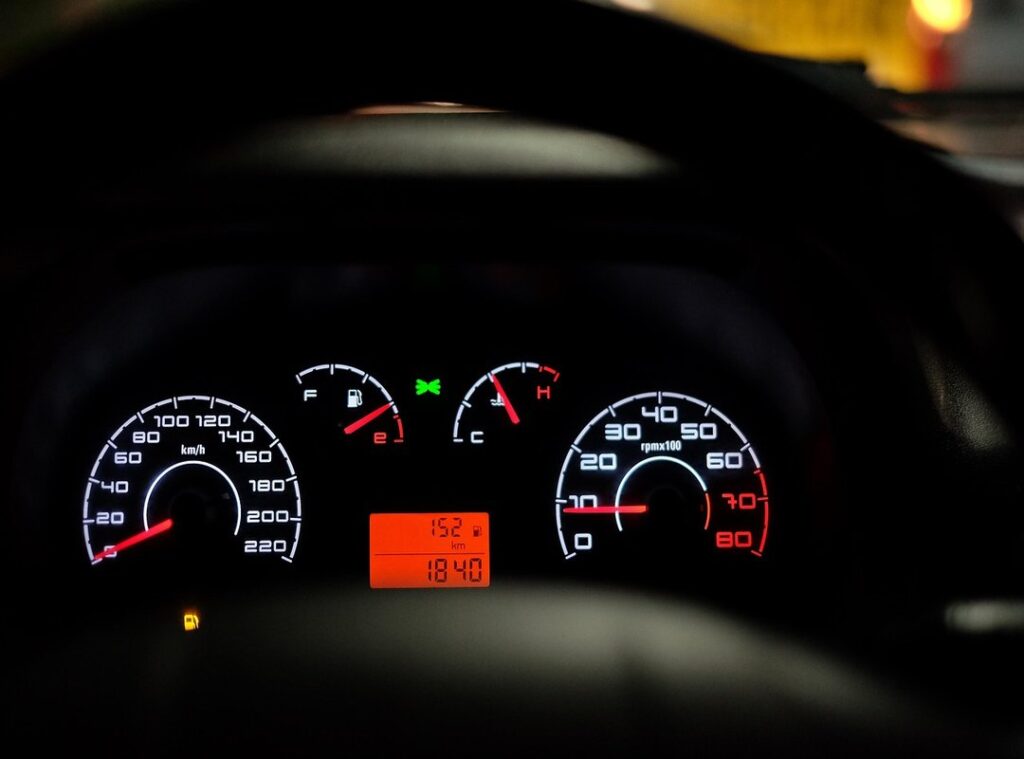
133 miles per hour (mph) is equal to approximately 214.04 kilometers per hour (km/h). Simple, right, and but the context behind it is fascinating.
Why does this conversion matter? Well, it helps you understand car performance specs and even comes in handy for international travel.
I promise to not only give you the answer but also break down the simple formula. You’ll get real-world context too, making you confident in any speed conversion.
This article is your go-to guide for understanding 133mph to kmh and other conversions like it. Let’s dive in.
The Simple Math: How to Convert MPH to KMH Yourself
When it comes to converting miles per hour (MPH) to kilometers per hour (KMH), there’s one magic number you need to know: 1.60934. This is the key to unlocking the conversion.
One mile is equal to 1.60934 kilometers. It’s like saying if you have a ruler that measures in miles, and you want to use it for kilometers, you just need to stretch it by that factor.
The formula is simple:
MPH * 1.60934 = KMH
Let’s walk through an example. If you want to convert 133mph to kmh, here’s what you do:
133 * 1.60934 = 214.04222
You might notice that the result has a lot of decimal places. For practical use, it’s common to round this to one or two decimal places. So, 214.04222 becomes 214.04 km/h.
It’s like trimming the extra branches off a tree to make it look neat.
If you need a quick estimate, here’s a handy trick. Just multiply the mph by 1.6. Or, if you prefer, add 60% of the number to itself.
It’s like giving your speed a little boost to get a close enough answer.
So, next time you need to convert MPH to KMH, remember the magic number and these simple steps. You’ll be a conversion whiz in no time!
Putting 133 MPH in Perspective: Real-World Speed Comparisons
Let’s break down 133 mph and see how it stacks up against some familiar benchmarks.
First, think about a common sports car like a Porsche Boxster or a Ford Mustang GT. These cars can hit around 150-160 mph, so 133 mph is pretty close to their top speeds.
Now, compare that to typical highway speed limits in the United States. Most states have limits of 70-80 mph. So, 133 mph is nearly double the legal limit.
That’s FAST.
How about other modes of transport? A high-speed train in Europe or Japan cruises at around 186 mph (300 km/h). 133 mph is still impressive but not quite as fast as these trains.
In the world of sports, things get even more interesting. The fastest recorded tennis serve is around 163 mph. A professional baseball pitch can reach about 105 mph. Impocoolmom
So, 133 mph is faster than a pro baseball pitch but a bit slower than a record-breaking tennis serve.
To sum it up:
– Close to the top speed of a Porsche Boxster or Ford Mustang GT
– Nearly double the typical US highway speed limits
– Slower than a high-speed train but still very fast
– Faster than a professional baseball pitch but slower than a record-breaking tennis serve
By putting 133 mph (214 km/h) into these contexts, you can really appreciate just how fast it is.
Why Are There Two Systems? A Quick Look at Imperial vs. Metric

Ever wondered why some countries use miles and pounds, while others go for kilometers and kilograms? It’s a bit of a head-scratcher, right?
The Imperial system (miles, pounds, feet) has its roots in the British Empire. The Metric system (kilometers, kilograms, meters) was developed during the French Revolution to standardize measurements.
The United States is one of the few holdouts still using the Imperial system for everyday life and transportation.
Meanwhile, most of the world, including Europe, Asia, and Australia, uses the Metric system. This is why you might see car speedometers with both MPH and KMH.
For travelers, this can get confusing. Imagine driving in Europe and seeing 133mph on your speedometer. That’s actually 214 km/h!
You’d be going way too fast if you didn’t know the difference.
Car enthusiasts importing vehicles or anyone watching international media, like Formula 1 races where speeds are in km/h, need to be aware of these differences too.
Knowing both systems isn’t just a chore; it’s a useful skill. It makes you more globally aware and helps you navigate different parts of the world with ease.
A Handy Speed Conversion Chart for Quick Reference
Knowing the formula is great, but sometimes a quick reference is all you need.
| MPH | KMH |
|---|---|
| 25 | 40 |
| 50 | 80 |
| 65 | 104 |
| 75 | 120 |
| 100 | 160 |
| 133 | 214 |
This table includes common highway speeds and milestone numbers for easy scanning. It’s perfect for those moments when you need to convert 133mph to kmh without doing the math.
Bookmark this page for future use, and it’ll save you time and hassle.
You’re Now a Speed Conversion Expert
133mph to kmh is 214.04 km/h, with the conversion factor being 1.60934.
You now have the tools to not only know this answer but to calculate any speed conversion yourself.
Understanding this simple math is incredibly useful for everything from car shopping to international travel.
The next time you see a speed in mph or km/h, you’ll know exactly what it means and how it relates to your world.
 Michaelo Taylorawsons brings a refined and confident voice to Impocoolmom, with a strong focus on modern men’s lifestyle, personal presentation, and everyday self-improvement. His writing explores the balance between timeless masculinity and current trends, offering readers practical insights on grooming, wellness, style choices, and lifestyle upgrades that feel both relevant and easy to apply.