
If you’re searching for real ways to improve energy, strength, focus, and drive, you’re likely looking for answers about natural testosterone support that actually work. With endless supplements, conflicting advice, and exaggerated claims online, it’s hard to know what truly supports healthy testosterone levels—and what’s just marketing.
This article cuts through the noise. We’ll break down what testosterone actually does for men, why levels can decline, and which lifestyle strategies, nutrition habits, training methods, and recovery practices are proven to make a measurable difference. No gimmicks. No miracle shortcuts.
Our insights are grounded in current research on men’s health, performance optimization, and hormonal balance, drawing from sports science and wellness studies to ensure accuracy and practicality.
By the end, you’ll understand how to support your body’s natural production safely and effectively—so you can build strength, sharpen focus, and feel more like yourself again.
Unlocking Your Natural Potential: A Guide to Hormonal Health
Searching for natural ways to boost testosterone because energy dips, workouts stall, and confidence feels off? You’re not alone. Studies estimate up to 40% of men over 45 experience low testosterone symptoms (Cleveland Clinic). While sleep, stress, and age matter, research shows targeted nutrients like vitamin D and zinc can improve levels in deficient men (NIH). This guide cuts through “miracle pill” hype and focuses on science-backed strategies and natural testosterone support. Expect clear steps, safety tips, and evidence explaining what works, why it works, and how to use it wisely.
The Foundation: Why Lifestyle is Your First Line of Defense
Supplements are supporters, not saviors. Think of them as the sidekick, not Batman. Without the fundamentals, even the best capsule can’t rescue your hormones. First, sleep is non‑negotiable. Research shows men who sleep fewer than five hours can see significant drops in testosterone levels, while 7–9 hours helps maintain healthy production (Journal of the American Medical Association). In other words, late‑night scrolling has consequences.
Next, nutrition sets the stage. Testosterone is built from dietary fats and supported by adequate protein and complex carbohydrates. Remove those building blocks, and hormone synthesis struggles. So yes, skipping meals and fearing fats can backfire.
Finally, exercise seals the deal. Compound lifts like squats and deadlifts, along with HIIT sessions, are proven to stimulate testosterone release. Add natural testosterone support on top of that, and you amplify results. Pro tip: prioritize consistency over intensity spikes.
The Core Four: Clinically-Studied Supplements for Testosterone Support
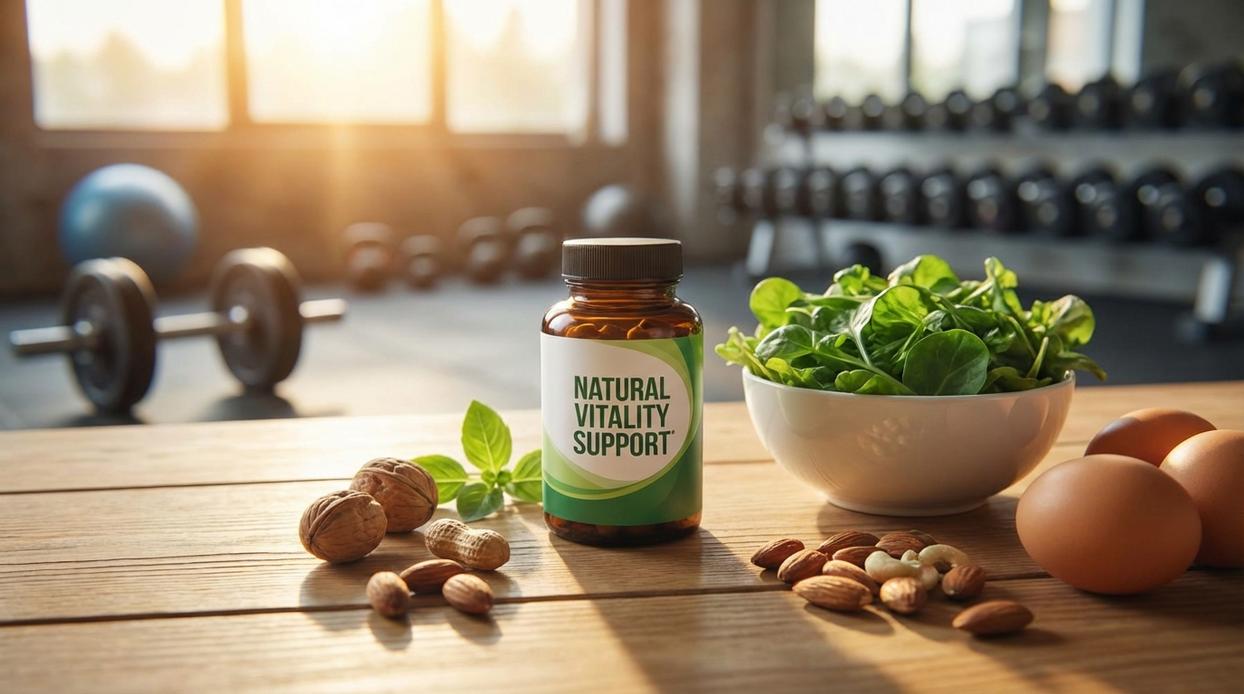
Scroll social media and you’ll see endless “test boosters” promising superhero-level gains. Here’s the contrarian truth: most of them are underdosed, overhyped, and built on pixie-dust ingredients. If you care about natural testosterone support, focus on the Core Four—nutrients and herbs with actual clinical backing.
Vitamin D3
Vitamin D3 isn’t just a vitamin; it functions like a steroid hormone, meaning it acts more like testosterone than your average micronutrient. Low levels are strongly correlated with lower testosterone, and deficiency is shockingly common—especially in people who work indoors or live in northern climates (Holick, 2007).
Some argue sunlight alone is enough. In theory? Sure. In reality, modern life keeps most of us inside (Netflix doesn’t help). Research has shown that supplementing vitamin D can increase testosterone in deficient men (Pilz et al., 2011). General guidelines suggest 2,000–4,000 IU daily, ideally paired with responsible sun exposure.
(Pro tip: Test your levels before megadosing. More isn’t always better.)
Zinc
Zinc is an essential mineral that plays a direct role in the enzymatic pathways responsible for testosterone production. Without it, your body literally struggles to synthesize T efficiently.
Some skeptics say zinc only matters if you’re severely deficient. True—but mild deficiencies are common, especially among athletes who sweat heavily or people on restrictive diets. Studies show zinc restriction can significantly reduce testosterone levels (Prasad et al., 1996).
Zinc-rich foods include oysters (nature’s cliché aphrodisiac), red meat, pumpkin seeds, and eggs. Supplemental doses typically range from 15–30 mg daily.
Magnesium
Magnesium doesn’t always get headline treatment, but it should. It supports sleep quality and may reduce Sex Hormone-Binding Globulin (SHBG)—a protein that binds testosterone and makes it unavailable. Lower SHBG means more “free” testosterone circulating.
Better sleep alone can elevate T levels (Leproult & Van Cauter, 2011). Yet many men chase complicated stacks before fixing sleep. That’s backwards.
Take 200–400 mg in the evening for relaxation benefits. (Think of it as your legal chill pill.)
Ashwagandha
If cortisol is the villain, ashwagandha is the stress-busting sidekick. This adaptogenic herb helps lower cortisol, a catabolic hormone inversely related to testosterone.
Clinical trials have shown ashwagandha supplementation can increase testosterone and improve strength and vitality in men (Wankhede et al., 2015). That’s not folklore—that’s peer-reviewed data.
Some dismiss herbs entirely. Fair. But when stress is crushing your recovery, ignoring cortisol is like upgrading your engine while riding the brakes.
Before obsessing over stacks, dial in basics like sleep and recovery—see cold showers sauna or both comparing popular recovery methods for context.
Bottom line: skip the hype blends. Master the fundamentals first.
Promising Contenders: Supplements with Emerging Evidence
D-Aspartic Acid (DAA) is an amino acid that acts in the hypothalamus and pituitary—central brain regions that regulate hormone release. Back in 2009, a small human trial found testosterone rose after just 12 days, particularly in sedentary or infertile men (Topo et al., Reproductive Biology and Endocrinology). However, follow-up studies over 3 months in resistance-trained men showed little to no effect. Supporters call it fast-acting natural testosterone support; critics argue the boost is temporary and context-dependent (both can be true).
Boron is a trace mineral linked to lower sex hormone-binding globulin (SHBG)—a protein that binds testosterone—and reduced inflammatory markers. In a 2011 study, free testosterone increased after one week of supplementation (Naghii et al.). Promising? Yes. Proven long term? Not yet.
- May reduce SHBG
- May lower inflammation
- Needs longer human trials
Fenugreek, used traditionally for vitality, contains furostanolic saponins believed to influence testosterone. Some 8–12 week trials report improvements; others show mixed results. (Think “potential,” not miracle.)
Building Your Smart Supplement Strategy
A smart supplement plan starts with data, not guesswork. Get bloodwork to spot real deficiencies—like low Vitamin D or Zinc—so you target what your body actually needs (not what TikTok is hyping). Studies show Vitamin D deficiency remains common worldwide (NIH), making testing practical.
Follow the “one at a time” rule:
- Introduce a single supplement
- Track effects for 2–4 weeks
- Note side effects or benefits
Quality matters. Choose brands with third-party testing (USP or NSF) to verify purity and potency. If you’re exploring natural testosterone support, ingredient transparency is critical. Finally, consult a healthcare professional—especially with pre-existing conditions or prescriptions.
Last year, I hit a wall: sluggish mornings, flat workouts, zero drive by 3 p.m. That wake-up call taught me that supporting healthy testosterone isn’t about a magic pill; it’s a layered process where lifestyle is the anchor and supplements are strategic support. At first, I wanted a shortcut. However, better sleep, protein-rich meals, heavy lifts, and sunlight did more than any quick fix. Then I added Vitamin D, Zinc, and Ashwagandha for natural testosterone support. The shift was steady, not flashy (think marathon, not montage). Start this week with one habit—dial in sleep—and consider Vitamin D as your foundation.
Take Control of Your Edge Starting Today
You came here because you wanted clarity on how to boost performance, sharpen your focus, and feel stronger without guesswork. Now you understand what actually moves the needle — from smarter training and recovery to targeted habits that promote natural testosterone support.
The real frustration isn’t lack of effort. It’s putting in the work and not seeing results. Low energy, stubborn belly fat, weak workouts, and brain fog don’t just hurt your physique — they chip away at confidence. The good news? You don’t need extreme protocols or risky shortcuts. You need consistent, proven strategies that work with your biology, not against it.
Here’s your move: start implementing one performance habit today — optimize your sleep, upgrade your nutrition, and eliminate the daily behaviors crushing your hormone balance. Then stack the next win.
If you’re serious about reclaiming your strength, drive, and presence, dive deeper into our expert-backed guides and gear breakdowns. Thousands of driven men trust our insights to cut through the noise and get real results.
Don’t settle for average energy or average performance. Step up, dial in your routine, and take control now.
 Taranica Salgadozo contributes a fresh and thoughtful perspective to Impocoolmom, covering topics that connect men’s wellness, style evolution, and contemporary living. With an eye for detail and a clear understanding of modern trends, her content helps readers discover smarter grooming habits, better lifestyle choices, and polished ways to stay confident in an ever-changing world.